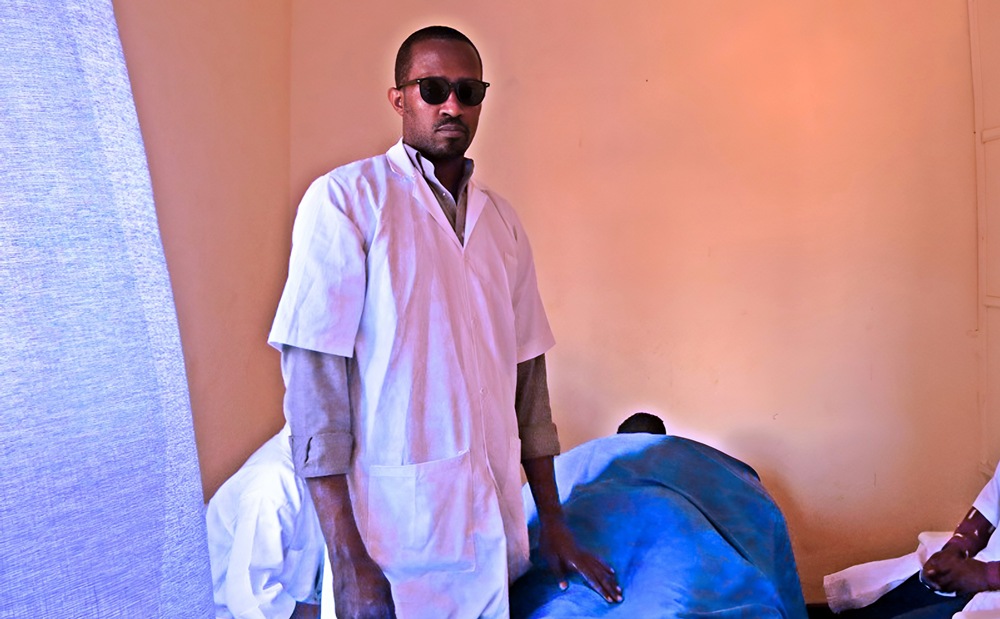
Kabera Donat, 39 years old, from Muyira Sector in Nyanza District says his life took a devastating turn when he began losing his eyesight 11 years ago.
At first, he did not realize the seriousness of his condition. He believed it was a temporary illness that would improve with treatment.
“Initially, I thought it was just a normal illness. I sought treatment in different places, hoping I would recover, but as time went on, I gradually lost hope,” he recalls.
After several medical consultations, doctors informed him that he would never regain his sight. The news was heartbreaking. Overwhelmed by despair, Donat struggled to imagine a future where he could live independently or contribute meaningfully to society.
Everything changed when he learned about the Masaka Resource Centre for the Blind, which provides rehabilitation and skills training for people with visual impairments. Determined to rebuild his life, he decided to enroll in the programme.
“When I arrived here, I began to accept myself again. I realized that even though I had lost my sight, I was still capable of learning, working, and making a positive contribution to my community,” he says.
Over the past six months, Donat has gained valuable knowledge and practical skills, including Braille literacy, orientation and mobility, daily living skills, and Massage therapy that are helping him become more independent and better prepared for the future.
He says the rehabilitation programme has completely changed the way he views disability.
“The training taught me that blindness should never be a reason to lose hope or depend on others for the rest of my life. I now believe in my abilities and in the opportunities that still lie ahead.”
For Donat, the greatest lesson he has learned at the Masaka Resource Centre for the Blind goes beyond the practical skills he acquired. It is the confidence to accept himself, rediscover his potential, and believe that his future remains full of possibilities.
Today, he encourages other people who are blind or visually impaired not to isolate themselves or give up hope. Instead, he urges them to seek rehabilitation services, embrace learning opportunities, and connect with people and organizations that can help them rebuild their lives.
His journey is a powerful reminder that while losing one’s sight can be life-changing, it does not have to define a person’s future. With the right support, determination, and opportunities, it is possible to regain confidence, achieve independence, and build a fulfilling life.