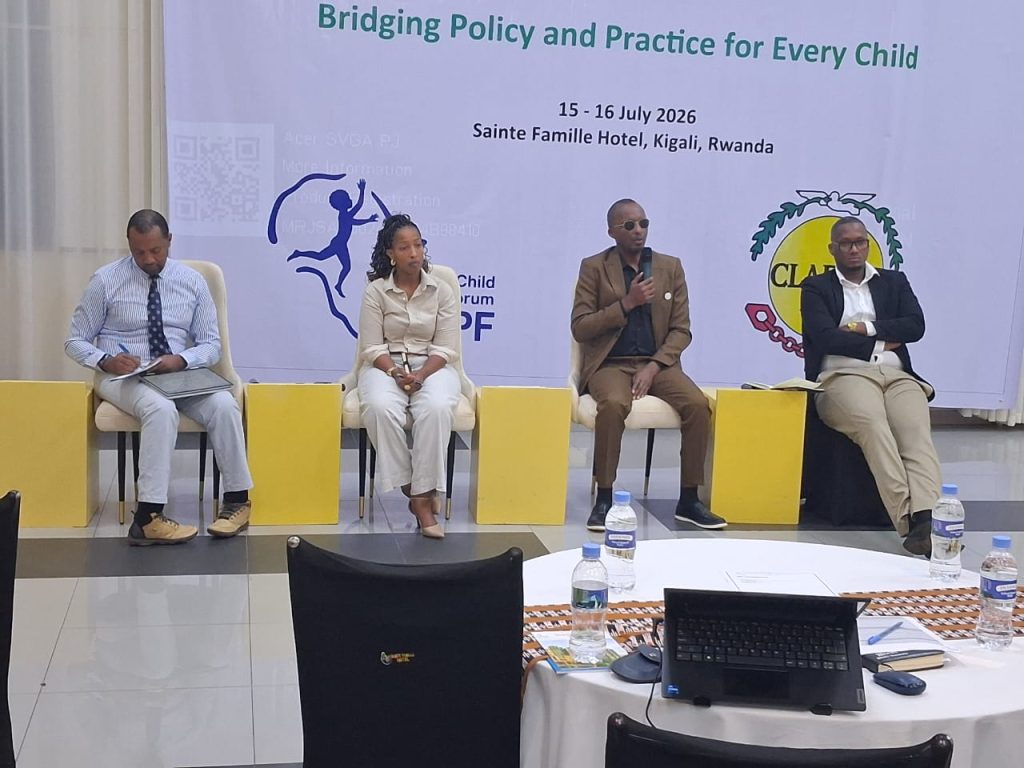
KIGALI — From July 15th to 16th, Rwanda hosted the National Symposium on Disability-Inclusive Pre-Primary Education, bringing together stakeholders to shape the future of early childhood learning. Representing the Rwanda Union of the Blind (RUB), the Executive Director, Mr. Mugisha Jaques, joined the Day 2 panel on “Disability Specific Challenges and OPD Priorities” to advocate for the targeted needs of children who are blind or have low vision.
While national data presented at the symposium highlighted commendable progress—with inclusive pre-primary schools increasing from 5.7% in 2017 to 66% in 2024, and the enrolment of children with disabilities doubling to over 3,100—significant gaps remain. Mr. Mugisha emphasized that the overall inclusion of children with disabilities is still below 1% nationally. Furthermore, he stressed that blind and visually impaired children face unique barriers that frequently go unnoticed within generic “inclusive education” planning.
During his address, Mr. Mugisha outlined several critical challenges currently hindering access to quality early education for visually impaired children. A primary concern is the early identification gap, as vision impairment in children under five is rarely screened at the community level. He also pointed to a critical lack of teacher capacity, noting that mainstream pre-primary educators often lack training in tactile and multi-sensory pedagogies, pre-Braille orientation, or adapting play-based learning for those who cannot rely on sight.
Additionally, essential materials like tactile toys and pre-Braille kits are scarce and expensive, leading inclusive centers to rely on ad hoc improvisation rather than standardized resources. Infrastructure also falls short; early childhood development (ECD) play spaces almost never feature the tactile pathways, safe orientation markers, and sound cues necessary for blind children to navigate safely. Compounding these systemic issues is the persistent stigma and low expectations from communities, which often lead to under-enrolment before a child even reaches the school gates.
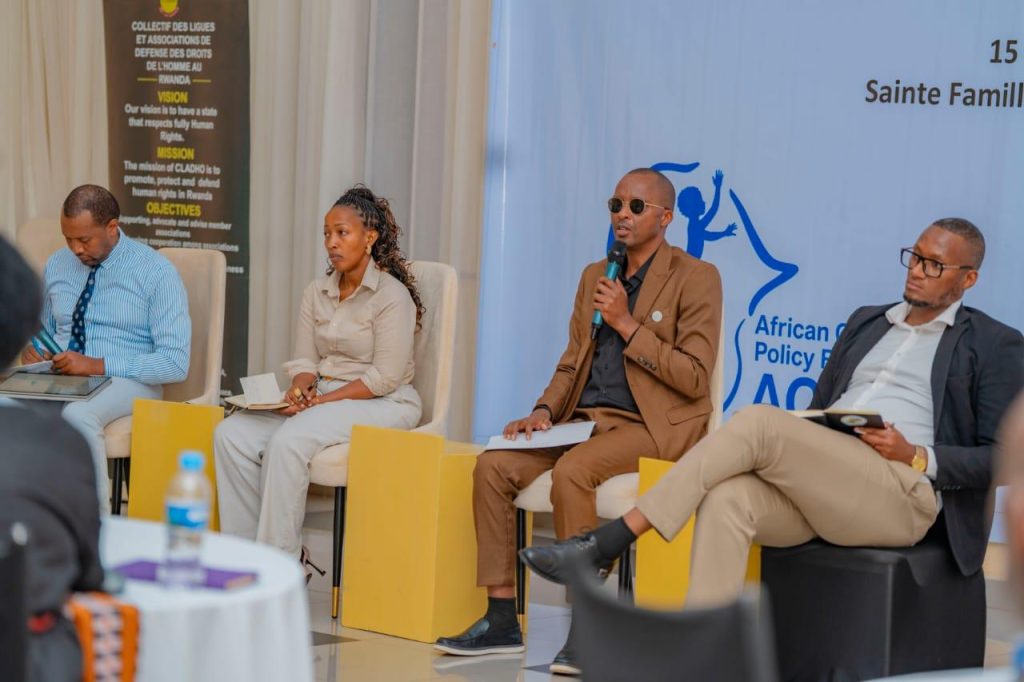
Despite these hurdles, RUB is actively demonstrating effective, scalable solutions. Mr. Mugisha shared the success of RUB’s RISE project, which places trained Braille Facilitators directly into mainstream schools. This model proves that with a skilled facilitator present, blind children can successfully learn in ordinary classrooms without the need for entirely separate infrastructure. RUB also continues to partner with various donors to help learners access essential assistive technology.
To build a truly inclusive foundation, Mr. Mugisha presented a set of priority recommendations to government partners and stakeholders:
Institutionalize Support: Move the Braille Facilitator role from a project-dependent status to a recognized, funded position within the Rwanda Education Board (REB) teacher establishment structures.
Equip Schools: Centrally fund and procure standard tactile and pre-Braille learning kits for every inclusive pre-primary center.
Early Intervention: Integrate vision screening into existing early childhood health contacts, such as community health workers and health post growth monitoring.
Accessible Design: Update infrastructure guidelines to explicitly mandate tactile and orientation features in play spaces, going beyond basic physical access like ramps.
Better Data: Mandate routine, disability-disaggregated data collection that specifies the type of impairment, rather than just using a broad “disability” category.
Empower OPDs: Formalize the involvement of Organizations of Persons with Disabilities (OPDs) in district-level ECD planning and monitoring.
Addressing the assumption that these needs are already covered under general special-needs education, Mr. Mugisha was clear: “General frameworks are necessary but not sufficient; a child who is blind needs impairment-specific skills… that a generic inclusive-education teacher is not trained to deliver”.
He concluded the panel with a powerful message. While Rwanda’s policy foundation for inclusive education is strong and enrolment progress is real, “the next step is precision”. Without impairment-specific investments, visually impaired persons will remain the hardest group to reach. Beyond advocacy, RUB serves as a dedicated implementation partner—supplying technical trainers, monitoring classrooms, and co-designing materials—and we stand ready to bring our experience to help close this gap.